Showing posts with label Pune. Show all posts

Monday, September 10, 2018

A Fighter laid to rest....

There was no reason for us to be associated, as we worked in different institutes and unconnected disciplines.  But we belonged to the same institution, Deccan Education Society and more importantly, shared the same concerns about its health and vitality.  Circumstances brought us together and it was Dr Bharat Deogadkar who saved me from succumbing to sentimentality.  In the process I learnt a lot about the value of confrontation in institutional roles.  More about it later.

Dr Deogadkar was a post graduate teacher of Chemistry in Fergusson College, Pune and taught at the Bharati Vidyapeeth after retirement in 2008.  Strangers would mistake him to be a Police Officer on account of his build, gait and demeanour and maintain a respectful distance.  He was a very active member of PUTA - Pune University Teachers Association and represented the teachers of Fergusson College as a member of the Local Managing Committee for several years.  He earned respect of the succession of Principals of that hallowed institution on account of his forceful and fact-based representations.  He was a familiar figure in the sprawling campus of the Fergusson College, taking long strides with an upright military manner.

Dr Deogadkar fought a long battle with cancer and passed away on 5 Sept 2018, so aptly chosen Teachers Day!  I pay my tributes to him and salute his memory!

I became a Life Member of the DE Society in 1987 and was appointed as Director, IMDR in 1989 upon the retirement of my illustrious predecessor, Dr PC Shejwalkar.  As a LM, we function through Boards of LM's, which meet periodically and arrive at important decisions.  Depending on the importance of each matter, recommendations are made to higher bodies like the Joint Board, the Governing Body and the Council of the Society.  This is a peculiar system of bottoms up management, which combines local autonomy with centralised direction and governance.  It was laid down in the early years of the Society in the nineteenth century and has evolved and stood the test of time over the last over hundred years.

It so happened that in 1990 the Pune Board received a letter signed by 14 teachers of the Chemistry department of the Fergusson College listing several of their grievances against the HoD, who also happened to be a Life Member and hence a member of the PB. Dr Deogadkar was one of the signatories.  Principal, FC presented the matter to the PB which felt that the matter being serious, it should be  referred to the Joint Board.  The JB discussed it at length trying to find a way out of the difficult situation created by serious allegations made against a senior Life Member.  Several sittings of the JB were held to look at the administrative, political and legal angles of the matter.  Suggestions were made including one of asking the LM concerned to call a departmental meeting and  tender an apology to all colleagues admitting that there were errors of judgment.  But the LM flatly denied any wrongdoing on his part and insisted upon a statutory enquiry to be conducted regarding the allegations.  After prolonged discussion, a committee of LM's from Mumbai and Sangli was formed to hold discussions with the complainant teachers of Chemistry department, many of whom held Ph D.    The idea was to defuse the tension and arrive at some conciliation.  This committee came back and reported the gist to the JB and concluded that the discussions with Chemistry teachers revealed a more horrifying state of affairs than mentioned in the original letter.  There was then no option left but to follow the path of a duly constituted Statutory Enquiry.

This work began in August 1991 and went on for more than a year finally concluding with the GB ordering demotion of the concerned LM in Jan 1993.  The one man Inquiry Committee of Justice Dr RD Tulpule, retired judge of the Bombay High Court, held 100 hearings, allowed several witnesses to be examined and submitted a voluminous report of findings, which amounted to holding the concerned LM guilty of most of the charges of misconduct.  This whole episode was unprecedented in the long history of the DE Society.  A sitting Life Member was stripped of his Life Membership for acts of misconduct by the Body of Life Members and the Governing Body by following due procedure.  This episode was important as it showed the academic world that life membership was based on trust inspired by integrity and collectively all the Life Members were capable of dealing strictly and impartially with any trespass of the pledge, even though it was committed by one of their fellow members.

Through this period of about 20 months, I worked closely with Dr Deogadkar, since I was entrusted with the responsibility first as Assistant Presenting Officer and later as Presenting Officer, when Dr GN Jogalekar suffered a fracture in Mumbai which laid him low for several months.  We had to collect factual details of each instance of misconduct, brief the advocate (we had to engage one as the suspended LM had brought one to represent him) and also produce witnesses.  Dr Deogadkar not only knew all the details but was also concerned about setting right the abysmal state of affairs and upholding the honour and reputation of the Fergusson College.

Many of my colleagues in the Board were unhappy that I had been spending long hours over many months in this trial of one of our own brother Life Members.  I had put my doctoral work on the back burner for this entire period.  There were a number of occasions when I would experience a surge of fellow feeling and  a sense of futility of the entire inquiry process.  Dr Deogadkar seemed to sense my unease and he would always underscore the importance of upholding fairness, integrity and transparency of the noble profession of teaching.  His words of sage counsel would once again revive my spirits, dampened by the indifference all around.  His stand was vindicated when after a long trial, both the Inquiry Committee and the University Tribunal found the misconduct proved.  An unfortunate, painful and challenging episode in the history of Deccan Education Society had finally ended in a manner befitting the long and glorious tradition of academic excellence, professional integrity and democratic functioning.

My association with Dr Deogadkar grew into friendship.  When Prof Pulin Garg held a process lab for the IMDR faculty in 1993, I invited Dr Deogadkar to be a part of it.  A process lab is a setting in which participants sit around and talk about the vital aspects of life, personal choices and meanings they have held.  The idea is to break out of self generated constraints and experience real freedom to pursue what one truly believes in.  For all of us it was a totally new experience.  Pulin was the master facilitator who helped us delve deeper into ourselves.  Pulin used to come dressed in a dhoti and kurta.  Babanrao, as we used to fondly call Dr Deogadkar, was thoroughly impressed with the 'troublesome old man in dhoti'.  Somewhere the realization dawned upon him that all his energy was being deployed in being of service to others.  That was fine, so long as it did not push him away from his true aspirations.  There was a marked change in his pursuits subsequently.  He was no longer interested in doing 'more of the same'.  He started doing different things, taking charge of Laxmi Travels, for instance.  Years later, he would remember Pulin and the process lab, as the turning points in his career.  He would continue to refer to Pulin as the 'troublesome dhotiwala'.

The 6 years I spent after retirement in Gurgaon did not diminish our bonds and we did meet a couple of times after my return, when I noticed that Dr Deogadkar's health had noticeably gone down.  His spirit was strong and he held out for quite some time against cancer.  But the end came last week.  His strong conviction, unstinted support, exemplary courage and genuine warmth will always remain in my memory.  I will always cherish his silent but spirited contribution to the glory of Deccan Education Society.  I salute you, Babanrao!


Wednesday, September 20, 2017

You will be missed Dileep!


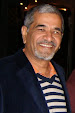
My friend Dr Prakash Bhave wrote a piece in Daily Sakal, which got published today.  That's how I came to know about the demise of my long time friend, Dileep Sadashiv Kulkarni. I had been enquiring with another friend of mine, CA Mukund Bhagwat about Dileep.  He had no information  about Dileep for over a year.  Three of us used to meet up once in six months for an evening of drinks and dinner.  But Dileep had turned a recluse since the last couple of years and so hadn't been attending.  The photo here was taken by me some years back at a restaurant.

Dileep was a couple of years senior to me in BMCC and Bhagwat , was a couple of years junior to me.  But we bonded much later in life, when I shifted back to Pune in 1978.  I used to work with Dr MD Apte, who was a Consultant first and later became an entrepreneur.  Dr Apte was also connected to the Pune Chapter of Cost Accountants.  That's how Dileep, also a cost accountant, came in contact with Dr Apte.  I had joined Dr Apte's consultancy in Pune.  By 1981, I moved to Prav Electrospark (Now Electronica Machine Tools) to handle their project of setting up a new plant near Pune.  The baton of the consultancy wing of Dr Apte was handed over to Dileep.

I noticed in Dileep a great desire to understand peculiar facets of people whom he admired for one reason or the other.  He was a film buff and a hardcore fan of Hindi film music.  Like a film director, he would choose carefully the angles from which he would study personalities.  Just as he would remember his school teacher, who always wore white clothes, he would also focus on the 'all-white' dealings of V Shantaram.  He was in awe of Shantaram for two other reasons: all his films that became hit were produced without a single star in them.  Secondly, he did not make losses on any of his films.  Dileep would reel off several anecdotes from Shantaram's life and hold his circle of friends spellbound.

In later years, he devoted a large part of his time writing about Satyajit Ray and his films.  With his characteristic style of focusing on the man and his profession, he unraveled many facets of Ray's personality.  He wrote with great feeling for the person behind the role.  I used to be in Delhi in those days.  We would meet whenever I visited Pune, talk about the new chapters he had written on Ray and then I would carry the manuscript with me back to Delhi.  The next time I would hand over what I had read and continue with the same routine.  The idea obviously was that he would publish it someday.  That day did not and has not come, as far as I know.  But I remember telling him that having read his writing on Ray, I felt sad that I had not met such a personality.

Dileep also wrote about Charkha and computer from his unique perspective.  He visualised the computer becoming as simple and accessible as the Charkha was during the heyday of the freedom struggle.  That did happen in his life time, though the smartphone is still not affordable to the masses.

Dileep had a child-like way of laughing in a happily amused manner.  The world was full of wonders and the more wonderful part for him was the way people led their lives.  Being true to oneself was what attracted him most.  He led his life the same way, picking up jobs, throwing them away, tasting all kind of liquor and then casually turning a teetotaler.  I am sure he must be chuckling to himself as he watches the goings on in the wide blue yonder.

You will be missed Dileep!


Tuesday, July 12, 2016

Self Publishing a Novel, in translation

So here I am back at blogging.  It's time to celebrate, as my second self-published work is out.  It's MeeTu, a Marathi novel translated into English by me and available both as a print book and a Kindle on Amazon.in.  It's originally written by F M Shahajinde in 1984.  That is over three decades ago.  Set in the interior region of my state, Maharashtra, it unfolds the love relationship between two middle aged college teachers, a Hindu woman and a Muslim man.

There are several things that appealed to me about this work.  First, there is no conventional ending either happy or sad.  Secondly, the whole novel is a series of exchange of letters.  The story unfolds and the reader has to be attentive to small shifts taking place in the relationship.  Both of them know the affair has to end one day, as they are already respectively married and don't want to junk those conventional marriages.  Thirdly there are references to social, cultural and historical contexts, which tell you about the way both have been moulded in their thought processes.  I found that quite fascinating.  Yet another aspect was that the protagonist comes out clearly owning up his sexuality and yet showing a sensitivity true to his poetic creativity.  Poetry flows through the prose in this entire work and you can see it being used to convey some disowned emotions.  Layers of convention weigh down on the woman, who finds it difficult to own up her love, driving her lover to desperation.  So it's a story played out in the minds and conversations of the two adults in love.  Nothing of the outer world seems to matter to them or move them.

I had started translating this novel way back in 1996, but then gave it up as I found it daunting to compile all the different references, without which a non-Marathi, non-Indian reader would find it difficult to appreciate the cultural gems strewn through the novel.  After I returned to Pune in 2012, I renewed my efforts, yet it wasn't gathering momentum.  In 2015 the whole family got together at Alexandria Va US at my son's place.  I found time and space to work on the translation.  Gathering references became so much easier with the Internet.  I finished the translation and began search for publishers.  I had told my friend Ashok Gopal that I would go for self-publishing if I don't get a positive response from three tries with publishers.  That took some months and then another couple of months went in getting some reviewers' nods.  Once they gave their go-ahead, I started the work of getting the book print-ready.  The templates were very useful and so were the tips given by book designers on community forums.

Getting the cover design was an interesting experience, thanks to the artist Chandramohan Kulkarni.  He wanted to know what I was trying to do by publishing the book.  I told him that it was a labour of love.  But the artist in him asked me a very direct question.  He asked if the book was meant for anyone in the world.  I told him about Indian diaspora and academics interested in South Asian literature being my intended audience.  Then it was my turn to ask him if he would give me three or four alternative designs for the book cover.  In his typical soft spoken drawl, he said that it was his practice to give only one design and that was final.  I liked his forthright approach, which quite sits with me as well, whenever I am asked to do some creative stuff.  So I gave him the technical specifications and he produced a superb cover design on the appointed day.  It went through the print review process and was accepted by the Createspace guys at first go.

I was working on the text, adjusting the layout time and time again, making corrections all the time.  I must have done this about ten times.  Then one fine day it all looked set.  So I uploaded it and then called the author, Prof Shahajinde.  It took me some time to explain to him the whole thing about Print-on-demand model of self-publishing sites.  I don't think he has got all bearings of this new way of doing books as yet.  But slowly things are becoming clear to him.  'Get some 100 copies', he told me over the phone.  I told him that copies came from US and the shipping charges   were more than the cost of the books.  So I won't get 100, but may be I will order some 25 copies.  And those I have got by now.  In times to come, Amazon will think of getting the books printed in India as well.

Now the publication date is set for 3 Aug 2016.  Prof GK Ainapure would be the chief guest and the book will be published at the hands of the current president of Marathi Literary Meet, Dr Shripal Sabnis.  The function will be held in the Maharashtra Sahitya Parishad hall on Tilak Road at 6 pm.

Friday, November 19, 2010

Auto, Wallet and I

I never used a wallet in my life, until I came to Gurgaon in 2006. In Mumbai, carrying a wallet in local trains was not advised. Instead I kept a small pocket diary in which I put a couple of currency notes. Never was my pocket picked in those 5 years of commuting. In Pune I continued the same practice and there wasn't much spending possible with the kind of salary I was getting.

After the mobile phone became a part of my attire in 2000, I started carrying a handbag in which I could put keys, papers, mobile and glasses. So again there wasn't any need for a wallet. After Gurgaon, I got on to online credit cards transactions and so gathered three additional cards and ATM cards. Then the wallet became necessary. But it never got inside my pocket literally. I still keep it in my handbag. Not many men carry handbags. According to my survey, the percentage never goes beyond 2%. But I am fond of handbags and I pick up one every year. I keep rotating the usage every 3-4 months. My current one was picked up from the Tibetan shop in McLeodganj a couple of months back. It has a traditional Tibetan motif of infinity and it is more like a zola.

While travelling by bus from Harihar to Pune, my handbag became a bit of an inconvenience. I couldn't keep it in the wirenet pouch in front nor at my feet. So I kept it in the overhead bin and dozed off. When the bus halted for a dinner break, I went for the zola and it slipped from my hands scattering its contents on the floor. There was my mobile, keys, wallet and assorted papers. I patiently picked up the contents and went outside to have dinner. My fellow travellers had noticed this episode. All of them looked typical wornout corporate executives - English speaking, courteous and generally keeping to themselves. Dinner was quick and frugal. I thought I could go back to sleep.

I kept the zola on my lap and tried to sleep. It didn't work. I kept it up again in the overhead bin. I had this slight hesitation. My fellow travellers had seen the contents. Some of them could easily eye the wallet. I pushed this thought away thinking that these guys are decent. I went back to trying to sleep. From time to time I would look around, but everyone was asleep. The bus driver had made up all the delay and we reached Pune ten minutes before time. I took the zola from the bin and found its flap was open. Did I not fasten it earlier? I wasn't sure.

I am one of the minority among Punekars who have a soft corner for the Auto Rickshaw Drivers. But I am a Punekar to the core. So I get into my element when the Auto chaps try to take advantage of the situation. At 6 in the morning at Swargate Corner, the Auto driver asks me to pay up Rs 150 to Baner Road. I tell him I will pay by the meter plus Rs 10. I raise it to Rs 20. There are some uneasy moments. But I stand my ground. There is a chap who is now ready to come at Rs 130. Its a deal.

Off we go in the snappy morning air. It's still dark out there. Now our man notices that his front lights aren't working. He keeps wondering how the light has suddenly gone out. Day break is at hand, so I am not worried. We zip into the apartment complex at Someshwarwadi.

He tries to tell me that even by meter the fare has jumped up to Rs 120. I calculate using my formula and tell him it is barely Rs 100 and I am paying him Rs 30 extra. I put my hand in the inside pocket of the zola to take out the cash. I knew the wallet cash had finished and so I would have to take it out from the secret reserve. Like all handbags, this zola from Tibet does have an inner pocket. As I pay him I find there is no wallet inside the zola. Panic grips me. The Auto chap looks into the Rickshaw and says, "You must have forgotten it in the bus". But I never took it out from the zola. Everything else is there, except the leather wallet given by one of my students many years ago. Leena had presented it to me with great affection.

All these chaps look so decent these days. They dress well, speak smoothly and now it seems, they flick with finesse. How foolish of me to keep it in the overhead bin? I came up carrying my bags and told my daughter that I had lost my wallet. I never keep better part of my cash in the wallet. Old habits haven't left me. My cash is kept along with some papers, envelopes and diaries, but rarely in the wallet. Its only the credit cards which always stay in the wallet.

My daughter immediately switched on the laptop and connected the internet and asked me to intimate the credit card providers of the loss, theft or whatever. I did not recollect the credit card numbers for three of the four cards I carry.

After the mandatory round of self cursing, I sat down to think of ways of recovering the card numbers. May be online banking? Yes, that looks good. Then the bell rang. The Auto driver was there with the wallet. I gave him whatever cash was there in the wallet. He said he had not opened to see the contents and asked me to check the cash. I didn't have to, because I knew it had only a few tenners.

He had gone out and kept thinking that he had seen the wallet in my hand. At some distance from our complex, he stopped and searched at the back of the seat and there it was, my red leather wallet stuck in the gap. It had slipped from my hand while getting down and taking the bags out. He came back and told the watchman. The watchman knew my flat number. That's how Raju Patil found me again. My wallet was back, my faith in Auto Rickshaw Drivers was reinforced and I knew Leena would not be disappointed.